Sunday, April 26, 2015
TIME WELL SPENT
To My Colleagues and Professor Darragh,
I can't believe how time has passed. I remember getting my Bachelors in Health Sciences from Walden University in January 2013. It took approximately 3 months before I was bored and said to myself that I should go back to school for my Masters Degree. I was excited but as soon as those assignments started to roll in I wanted to strangle myself. Needless to say I persevered and completed my Masters. I am so proud of myself. I am a mother, grandmother, friend, aunt, sister, nurse, spouse, and a student. There were so many titles that I had to juggle that I was getting weary. But as time went by...the light at the end of the tunnel was getting brighter and brighter, which gave me the motivation to continue.
I have learned that there are so many organizations from which to choose to work with doing child advocacy work. Organizations such as NAEYC, Zero to Three and the Children's Defense Fund are just a few organizations I have researched. I have also learned that while the first early childhood program was initiated years ago to this day, education is evolving and ever changing sometimes for the benefit of children and sometimes not. I have also learned that even though disparities still exist in America, there are enough organizations on board to make the changes needed to close the education gap. Organizations such as the National Association for Child Development and The Center for Education Innovation are just two of those organizations. After researching for this course, the future for our children looks brighter just by knowing that so many people are making children a priority.
A long term goal of mine is to open my Karens Kidcare Learning Center, I want to expose children to the arts, music, etiquette, manners, cooking, math, reading and dance. I just have to focus on what next steps I have to take to get proper licensing. I have been motivated by all of my classmates who are already in the field and enjoy what they're doing.
To Professor Darragh and colleagues, I wish everyone well in all of their endeavors. I know we have had great experiences and educational insights while attending Walden University. Thanks for all your praise and encouragement. I hope at one time or another I have said a kind word to encourage you. As we embark in our new roles may we have honesty, integrity, empathy and passion in all we do. Take care and I hope to see some of you at graduation. I will probably do January and make a Disney trip of it also. Farewell to you.
Sincerely,
Karen Mauney
mochacinnamon@aol.com
Wednesday, April 8, 2015
JOBS/ROLES IN THE ECE COMMUNITY: INTERNATIONALLY
UNESCO- United Nations Educational, Scientific, and Cultural Organization, the mission is to contribute to the building of peace, the eradication of poverty, sustainable development and intercultural dialogue through education, the sciences, culture, communication and information. One of UNESCO's priorities is to attain quality for all and lifelong learning. I am an advocate for quality education for all. I also believe that educators can instill the gift of lifetime learning in young children if given the adequate resources.One job I saw that interested me was an Administrator job which needed the qualifications of an advanced degree and fluency in English or French working with youth. www.en.unesco.org
ISSA is the International Step by Step Association
ISSA's goals are to ensure equal access to quality care and education for all children from birth until 10 years. One priority of ISSA is to advocate for inclusive early childhood systems and critical issues related to access, equity and quality. I am all for equitable education for all children. I feel all children are entitled to receive quality education regardless of race or economic status. Unfortunately, there were no job postings at this site that I saw. www.issa.nl
FHI360- is the Science of Improving lives. It is a non-profit human development organization dedicated to improving lives in lasting ways by advancing integrated, locally driven standards.The key to improving lives is in generating, sharing and applying knowledge. To improve a person's life, I believe you have to receive a quality education. There was one job in particular that piqued my interest: Student and Family Engagement (SAFE) Officer Department of School and Community Services dedicated to supporting pressing education needs and challenges of children from early childhood to adulthood. Programs foster partnerships, build capacity to improve teaching and learning and to increase family involvement. Qualifications for this job are Bachelors Degree, awareness of culturally competent practices, experience in a school or youth development environment, ability to work alone an with teams, you must be a self starter, fluency in English and highly effective written and oral skills. I actually applied to this job. www.fhi360.org
Saturday, March 28, 2015
EDUCATIONAL ORGANIZATIONS
There were many organizations that I discovered but unfortunately many of the sites had no career opportunities at this present time.
Citizens Committee for Children is an organization that educates and mobilizes New Yorkers to make the city a better place for children. They identify and promote practical solutions to ensure that every New York City Child is healthy, housed, educated and safe. The career opportunities page said to check back for openings. www.cccnewyork.org
New Visions- The mission is to ensure that all New York City public school students regardless of race or economic class have access to a high quality education.
One job posted was for Director of Development. Duties included meeting annual funding needs, strategic planning by identifying needs across the organization and determine and develop efforts to secure support, the ability to manage a team to reach clearly defined goals, delegate responsibility and support a seasoned staff in their ongoing professional development and to problem solve by using effective approaches to new challenges. www.newvisions.org
The Center for Educational Innovation-Public Education Association was formed when two non profit organizations merged to form one common mission: working together to ensure quality education is guaranteed to every child. Reform efforts include the establishment of new schools, staff development, school leadership, research and extensive information services for families. No career opportunities available at this time.
The Department of Education is in charge of the public and charter schools in New York City. There are Education Administrator and Supervisor positions available. There are approximately 135,000 people who work full time in New York City's public school system. You need approximately 10 certificates in various fields just to teach. Numerous openings are available. www.schools.nyc.gov
Saturday, March 14, 2015
EXPLORING ROLES IN THE ECE COMMUNITY: LOCAL AND STATE LEVELS
The Children's Aid Society is an organization that helps children in poverty to succeed and thrive. The organization is 160 years old. The Children's Aid Society serves New York's neediest children and their families at more than 40 locations in the 5 boroughs. The caring starts with prenatal counseling and ends with college and job preparatory training programs. All of the child's life from health care to academics is addressed. Their mission is to help children in poverty to succeed and thrive. One job I saw was for Lead Teacher. Qualifications include having a Masters in ECE, having a valid teaching certificate issued by New York State of Education, and two years teaching experience. Another Job offering was Family Advocate. Duties included parent workshops, advocate, coordinator, supporter and recruiter.
NYC Charter School Centers
Charter schools are independent of the Department of Education. Each school is held accountable for advancing student achievement. One job was Elementary Teacher. Qualifications include, committment to working in under-served communities, NYS teaching certificate, 2 years of teaching experience, Masters Degree in education. Another job was Associate Learning Coach which had the qualifications of NYS Teaching certificate and experience achieving results withing high needs urban population. The last job that piqued my interest was Operations Manager. Duties including maintaining students information on a data base, managing immunizations, conducting bi-yearly inventory of student files, and assisting the Director.
New York City Department of Education has 135,000 full time employees working in the New York City's public school system. For any job you need at least 10 different certificates. For teaching you need the teaching certificate plus certificates in child abuse, violence, etc. To be a School District Leader which is a supervisory position the school district, you must possess a SDA which is a school district administrator certificate.
These organizations appealed to me because they all deal with children and the betterment of children. I will definitely have to figure out how to get some experience under my belt before changing careers. There are also numerous certificates that I will have to achieve before I even can start to use any other skills that I have obtained in my past or in my studies.
References
www.childrensaidsociety.org
www.nyccharterschools.org
schools.nyc.gov
Sunday, August 10, 2014
5 STAGES OF TEAM DEVELOPMENT
I have belonged to many groups of people working together. I have been a PTA member where the goals were to identify and eradicate any obstacles in the way of our children having a quality education. I have been part of study groups in nursing school. We bonded because we all had the goals of passing our exams and gaining our licenses. I am presently in a neighborhood beautification group. We gather every Saturday morning that we are available to clean up and plant flowers on a dead end block around the corner from me. My undergrad experience with groups here at Walden University had me in classes with some of the same people. We had the goal of getting our Baccalaureate degree. I did meet a few classmates at graduation, but sadly many did not even show up for graduation. The groups usually have a closing celebration after a task is completed. I usually remember the members with fond memories but we usually don't exchange personal information after reaching our goals unless we have something else personal in common. The group of classmates I have met during my Graduate classes has been similar. Some of us have had all our classes together so far. Soon we will split to our concentrated courses. Hopefully I will get to meet some of the students at graduation next year. The adjourning phase is important because this is when the group can celebrate their success of the project. If there was not success, this is where brainstorming could be done to discover why the project was not a success. Adjournment brings closure. If the group was a high performing group there will be sadness about the conclusion of the project. If the group was low performing without success it will be easier to leave the team. I do hope my Walden University closure will provide the opportunity to keep in touch with some of the other students.
Sunday, August 3, 2014
CONFLICT RESOLUTION
I don't usually have conflicts. Maybe once a year on my job. I work for NYPD. There are so many bosses..sergeants, lieutenants, captains, commanders etc. Then there are civilians like myself. We work as a team at my job. Everyone knows how to do every aspect of the job...whether it is drug testing, writing review slips, giving instructions to candidates etc. Another civilian had disrespected me by slamming a door after saying a derogatory remark to me. At first I was going to avoid the situation but avoidance is not the way to go. If you avoid someone disrespecting you, it will happen again and again. I confronted this person coming from a place of being disrespected and not liking it. Her voice was raised and so was mine. We were in an enclosed room but I was so mad at myself for letting her take me to that place. I just said what I had to do not so nicely and that was the end of it. I walked away to continue doing my job. Now this person is someone who I am very close to usually but when she is pressed for time working she can sometimes get anxious and nervous. It bothered me all that evening after I had left the workplace. The next day I said "Good Morning" to her and she answered begrudgingly. Later that day I went in her office and touched her shoulder and said "you know I hate when we argue". That was the end of that episode. We continue to work together but in the back of my mind, I know she can loose it at any time so I am alert to any change in behavior. The way that we handled that situation was a lose-lose situation. We both were yelling, not listening to the other and were acting very unprofessional for about 30 seconds. We should have made that a win-win situation by discussing what set her off and dealing with that issue. Instead I chose to ignore her in the beginning which probably is the reason that her temper escalated. By discussing the situation and arriving at a solution that satisfied both of us, we both would have remained calm and professional in the workplace.
Sunday, July 27, 2014
COMMUNICATION SIMILARITIES AND DIFFERENCES OF SELF TEST RESULTS
This weeks assignment allowed us to take self-tests on our communication styles, techniques and listening skills. Secondly, we were to ask two friends/acquaintances/relatives that are close to us to take the same tests also. After tallying the results, we were to compare the results for any differences or similarities. I was most surprised that my anxiety level was visible to others prior to speaking in front of others. I researched our textbook to find that in some cases rather than anxiety, I have communication apprehension. Communication apprehension is described as "when an individual feels uncomfortable participating in a group conversation" (O'Hair & Wiemann). I do feel comfortable if I am sitting in a group talking but if I have to step to a podium in front of a crowd of people then anxiety sets in. One insight that I gained insight to is communication processing. This is one aspect of communication where I am sure there is a glitch in some people's minds. On my job, instructions have to be given daily to adults. Many understand but many need the information to be repeated more than once. These instructions are simple. I believe some people may have problems with their communication processing by being distracted by the thought of having to be undressed in front of others which blocks their processing. Another insight was the interaction appearance theory. I have learned that you can't judge a book by it's cover. Appearances have nothing to do with the job a person might have. It is not until you begin to interact with someone that you learn all about them.
Sunday, July 20, 2014
CULTURAL COMMUNICATION
I communicate with many people of my many walks of life. With my nurse friends we have our own jargon others would not understand. With close friends, I tend to use low language with slang words which we both can understand. Examples are "word", which means the truth and "school" which means to teach a lesson to someone. I am able to be informal with them. I have friends that are Filipino, Asian, Hispanic, Italian, East Indian etc. Close friends and occupational friends are the closest people to me and we understand each other because of our similarities communication is understood fully. Perhaps being more of an active listener will benefit me sometimes because I tend to speak more than listen. This would make me a better communicator with them.
Supervisors at work who are sergeants, lieutenants, and captains. I use standard English with proper grammar with them. I can call it politically correct language. I have a tendency to speak low. One strategy is to speak louder, capture my audience and interact fully with them.
I sometimes have to speak to Non Native English speakers. I use simpler words, which are easier to understand. I also use accommodation by changing my style of communication to adapt to them. For example when I worked in the Pediatrics ER, I would say "amarillo libro" which means yellow book for immunization book. Eventually I would say "tarjeta vacuna" which means yellow card and the parent would understand fully. One strategy I can use for Non Native English is to look out for non verbal cues if there is an interruption in communication. It helps to be aware of non verbal cues as well as verbal cues.
Sunday, July 13, 2014
VERBAL AND NON VERBAL COMMUNICATION
I decided to watch an episode of L.A. Hair. This show revolves around a hair salon for celebrities in Los Angeles. There are 8 main characters who all work for the salon. There are different ethnicities and genders. Everyday a different group of clients come in to get services. The communication I observed was smiles, eyebrows raised, touching, rolling of the eyes, grimacing and direct eye contact. I could see which personnel got along with the other personnel. I could tell from facial expressions if the conversation was pleasant or not. One client was verbally insulted and the look of anger on her face was clearly understood. When I heard the conversation, I could clearly understand why she was grimacing. The hairdresser spoke negatively about her dandruff. I believe my assumptions would have been correct if I were a regular viewer of this show. I find that even in relationships that actions speak louder than words. By just observing you can see that a person is happy, sad, angry, tired, grouchy etc. I am very intuitive when it comes to observation I think in part to learning nursing assessment, so I see and notice everything that others don't see. It annoys some people, but to me I think it is a perk........Reference www.wetv.com/shows/la-hair/episodes/season-3 Season 3 Episode 1: Chair Battle Royale
Saturday, July 5, 2014
COMPETENT COMMUNICATOR
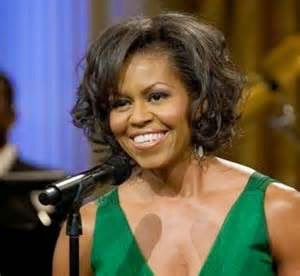
Upon reading about the blog assignment this week. The first person who cam to mind was Mrs. Michelle Obama, the wife of the President of the United States. She speaks with such ease to crowds each time I hear her speak. Whenever Mrs. Obama speaks, she has my full attention. She has the ability to engage her audience completely. I googled her speech techniques and ran across an article "Michelle Obama's Speech: Poise, Passion, Presence". Those are all the features that I witness. She is poised, has clarity, no signs of anxiety, has passion in her eyes and in her tone of voice. She is also very present. She is concentrating on the audience she is trying to reach. All these factors make her communication style admirable to me. The warm smile and eye contact express her interest in the audience. Ye I would want to model my own communication behaviors after her. I tend to get nervous when speaking in front of large crowds. My voice starts cracking and then it gets low to a whisper. At least that was the experience 20 years ago in an Oral Communication course. I wish I showed some of the same poise that she does.............
DiResta, Diane. (2012,Sep5). Michelle Obama's Speech: poise, passion, presence. Knockout Blog. DiResta Communications, Inc. Retrieved from www.diresta.com/michelle-obamas-poise-passion-presence/
Saturday, June 28, 2014
PROFESSIONAL HOPES AND GOALS
One hope that I have when I think about working with children and families who come from diverse backgrounds is that they receive a non-biased, quality education equal to every other child in the classroom. The color, religion, culture shouldn't correlate with the education that they receive. I hope the parents get to have dialogue with the educator on a continuous basis so that they have full understanding of the curriculum and protocols.
One goal I would like to set for the early childhood field related to issues of diversity, equity and social justice is that cultural diversity forums be scheduled at least three times a year for colleagues to confer and gain knowledge and awareness from each other.
Thank you to my colleagues for your supports, comments and enlightening. I have learned so much in this course that I definitely will take from this experience. Good Luck in all your future classes. Keep striving!!!
Saturday, June 21, 2014
WELCOMING FAMILIES FROM AROUND THE WORLD
Denmark is the name of my family's country of origin. In Denmark schools strive to provide children with academic skills, general competencies and opportunities for diverse, personal development. They also facilitate an atmosphere of equality and freedom of spirit. The world famous Lego building toys are from Denmark. If the classroom doesn't have any, I would invest in some for the classroom so that the child will have something familiar to play with. In Denmark children spend 3-4 hours per day outside tending to forests, gardens and playing. I would allow outdoor time to plant gardens. Denmark also also encourages the children to choose with what to play and with whom to play with. I would allow the children in class to have free time to do what they want for a little while. This will enforce there abilities to make choices. Denmark believes in Vygotskys's theory that social interaction fosters cognitive functions. Parents will be invited to the classroom and have one on one meetings with the educators to discuss the curriculum. Early childhood educators in Denmark value parent-child-educator interactions. I will continue to instill the importance of this vital communication. In keeping up with Denmark norms hopefully the transition to American education will be a smooth one for the child and the family...........References: www.eupedia.com/denmark/trivia.shtml
www.oecd.org/education/schools/2475168.pdf
pure.au.dk/ws/files/815/critical_perspectoves_on_danish_early_childhood_education_and_care_pure_.pdf
Sunday, June 15, 2014
THE PERSONAL SIDE OF BIAS, PREJUDICE, AND OPPRESSION
I was 29 when I watched a movie called "Do The Right Thing" in 1989, with shock and dismay. This movie revolved around a hot summer in Bed-Stuy Brooklyn, which is 90% Black. The story centered on an Italian pizzeria where all the Blacks spent their money. In this establishment, all the pictures on the wall were famous Italians. There on the walls were Frank Sinatra, Rocky Graziano and Tony Benett among others. The Blacks thought they should be represented on the walls too since they were the ones spending their money there. Sal, the owner, fought hard tooth and nail by saying no, it was his shop and that he could decorate the shop anyway he wanted to. One day all the tensions exploded. There was a brawl in which the pizza shop was destroyed by the Blacks. The owner and his sons were fighting against the Blacks also. A key player in the neighborhood and a neighborhood fixture Radio Raheem was killed in the melee by the cops.
This movie diminished equity by the refusal of the owner to display any Black people on his walls. The feelings I felt went from rage to sadness that this incident could've been avoided. On one hand it was the owner's prerogative to put what he wanted on his walls. On the other hand tensions were rising and to keep the peace, one picture on the wall may have satisfied the need of acceptance by the neighborhood. The owner would have had to make the change. It was his opportunity to do the right thing.
Reference: Do The Right Thing. Retrieved from http://www.imdb.com/title/tt0097216/
Saturday, May 31, 2014
PRACTICING AWARENESS OF MICROAGGRESSIONS
I experienced a microassault once in a bank. There were at least 6 people on line. When it was my turn the teller looked at the next person in line and said "How can I help you?". For a second I thought I was living in the twilight zone. I am not a small person that someone can overlook. I was in a little bit of a shock for about 30 seconds. After that period I said "Excuse me, but am I invisible? I was standing next in line!". The teller acted like she hadn't even seen me standing there. She tried to laugh off the matter. I was born and raised in New York. As a minority, being African American, we do not put up with racism too well. Some of my counterparts that may live in other regions of America may fear being outspoken but we do not. After that she acknowledged me but I am sure if I was some type of docile, introvert she would have skipped right over giving me any kind of customer service. I felt outrage, it really doesn't take much for me. I dislike inequality and unfairness, for anyone. I have spoken up for other people also when I see something being done unjustly. It didn't matter what skin color they had, if they are being treated poorly, I will bring their attention to it. James Baldwin stated in one of our articles this week that "the messages of racism teach that the lives of racialized peoples are dispensable and disposable, that the work of racialized peoples is less valuable, that the thinking of racialized people is less useful, that the concerns of racialized peoples are trivial" (Mables & Mables, 2010). In that moment the teller made me feel devalued. After a brief and to the point chat, I hope she learned a lesson that you cannot treat or mistreat people in the way that she did.
Reference
Margles, S., & Margles, R. M. (2010). Inverting racism's distortions. Our Schools/Our Selves, 19(3), 137--149. Retrieved from the Walden Library using the Education Research Complete database: http://ezp.waldenulibrary.org/login?url=http://search.ebscohost.com/login.aspx?direct=true&db=ehh&AN=51372248&site=ehost-live&scope=site
Saturday, May 24, 2014
PERSPECTIVES ON DIVERSITY AND CULTURE
I asked three co workers about their thoughts on the definitions of diversity and culture. Friend#1 is a 42 year old male from the Dominican Republic. His definition of culture was the attitudes and behavior of a particular group. His definition of diversity was that people from different backgrounds that live in the same area or town. Participant #2 was a 44 year old Puerto Rican woman. She said to her culture meant background, heritage, and cultures. Her definition of diversity was whether you are Black or White, where your family is from, the education you have received, your neighborhood and social class. The third participant was a 45 year old woman from Colombia. She felt that culture was values , experiences, ways of cooking shared by a group of people. Diversity to her was people from different countries with different religions, co-existing with others from other countries. I discovered that no matter who you ask..no two definitions are going to be the same.
In this course we have read about how children of all cultures should be able to receive a great education regardless of background. We have learned how important for children to learn about each other and also learn about how similar and how they have differences too.(Derman-Sparks). In this class we have also read about how some people identify all Asian ethnic groups as Chinese. (Ngo). Despite the way we look alike, each culture is unique and different. African Americans, African and Caribbeans all look alike. That is our similarity. Our cultures are different. It is important to accept others for who they are not for what they are.
Saturday, May 17, 2014
MY FAMILY CULTURE
The three items I would take with me to my new destination that will represent my family culture would include a DVD boxed set of the "ROOTS" documentary. ROOTS was a made for television documentary made in 1977 by Alex Haley, depicting the history of Africans and their travels to America due to the kidnapping by the British in Africa. It was a harsh and at times hard to visualize but it is my story. I would also bring with me a photo album of family pictures taken at family reunions. Black family reunions are positive cultural events usually held annually or biannually by family members at different host cities. They celebrate the strengths and traditional values of the African American family. The 3rd item would be a cast iron skillet used for cooking and frying. In Africa cast iron pots would be used to cook on in open pits. Slaves also used these skillets/pots in slavery in the Southern states. Today these skillets are still a mainstay in African American homes.
I would feel sad if I would have to give up two of the items upon my arrival to the island. They all have equal importance.
When I first read this blog assignment hastily, I thought I had to just bring 3 items, immediately I thought IPOD, batteries and my phone. Then I reread the details, I had to give some thought to the exercise to realize what was truly a representation of myself. It was an interesting exercise which caused me to think deeper.
Reference http://www.soul=food-advisor.com/Soul-Food-History.html
http://www.ncnw.org/events/reunion_history.htm
Saturday, April 26, 2014
WHEN I THINK OF RESEARCH
Insights I have gained about research from taking this course include learning so many new terms and methods used in research studies. I always thought that research was a simple process when in fact it is a very complicated process. New terms include triangulation, variable, equity, quantitative, etc. Lessons that I have learned that it takes a huge amount of methodology and step by step techniques to begin and implement a study. There are many parameters included in research. You have to choose a topic, who the participants will be, what methodology you will use, the timeframe you want to study, and the analysis interpretation that will be used. Challenges in this course were the new vocabulary used: qualitative, paradigm, positivism, etc. were a just a few of the terms used that needed full understanding before you could begin to start a research study. The funny thing is that the week we learned about triangulation, I went to the movies and saw "Captain America 2". During the film triangulation was mentioned and I smiled to myself because I had just learned about this and I was seeing it used in the movie. What a coincidence that was! My perception of early childhood professionals has been modified by discovering how much hard work goes into doing a study. It takes time and diligence to conduct a research study correctly. Informed consents and thorough analysis of data collected will result in valid results. Thank you classmates for all the support given to me in this course. Good Luck in future courses!!
Sunday, April 6, 2014
RESEARCH AROUND THE WORLD
I researched the Early Development Virtual University (ECDVU) Sub-Saharan Africa (SSA) topics. I read about the topic of "Assessment of Interaction and Stimulation in Single Mothers with Low Income Families". This study was used to create guidelines that will initiate a closer bond between parents and their children, identify and stimulate children living in single parent homes and to identify the strengths and weaknesses of the childcare givers in Malawi. Another topic was "Utilizing Indigenous Stories in the Promotion of Early Childhood Development Programs in Uganda". This project stressed the importance o storytelling in child development much like we in the United States stress reading storybooks to children even while in the womb. There were topics of encouragement for fathers to get involved with their children's care, model training programs in Ghana and assessing school readiness in Kenya. I was surprised by the fact that the topics were so similar to the norms of what we research here in the Unites States. I have never been to Africa but when I think of Africa I mainly think of rural areas with not much emphasis on education. Clearly this is not the case. Africa is thriving and trying to make childhood education a major issue. They are developing teacher training curriculums and initiating programs focused on supporting childcare programs for working families. Education is the key to making a better society. I am glad that Africa is moving in the right direction......................http://www.ecdvu.org/ssa/major_reports.php
Saturday, March 22, 2014
RESEARCH THAT BENEFITS CHILDREN AND FAMILIES--UPLIFTING STORIES
Numerical rating scales (NRS) involve estimates of pain shown to children to describe their pain levels. These pain scales are used in children over the age of 8 years. At this age the children can verbalize and clearly and have the ability to think and decide. There are many of these pain scales. Many of the scales have not been researched thoroughly. As a pediatric nurse, I used these scales frequently and responses were usually valid. Here is an example of a pain scale:.........Pain Research and Management. National Institute of Health. www.ncbi.nlm.nih.gov/pmc/articles/PMC253905/
Saturday, March 15, 2014
MY PERSONAL RESEARCH JOURNEY
I've decided to research the effects of death of a child's pets and/or loved one. I also want to research how I as a caregiver/educator can assist with teaching coping skills to children. So far I have learned that reputable websites most often end in edu, org, or gov. I will be very careful in choosing the sites I pick for my research information. I do not know anyone who has done this research before. I think it is an important topic because death strikes everyone regardless of age. Qualitative research will be done to show the meaning or significance of death and it's affect on children ages 5-13 years old. I will take a qualitative approach to learn how children understand and make sense of the topic. Do any of my colleagues have any insights or advice dealing with this subject?
Mac Naughton, G., Rolfe, S.A., & Siraj-Blatchford, I. (2010). Doing early childhood research: International perspectives on theory and practice (2nd ed.). New York, NY: McGraw-Hill.
Subscribe to:
Posts (Atom)